Myth, Legend, and History
How three ways of telling the past shape what we believe about it
Every society carries its past in more than one register. Some stories are meant to be believed as sacred truth, some are meant to be believed as history-tinged legacy, and some are meant to be verified against evidence. Myth, legend, and history are the three main containers people have used across cultures and centuries to hold the past — and although they often get blurred together in casual speech, each one does a distinct kind of work. Understanding the differences matters not just for classification's sake, but for reading any tradition — oral or written — on its own terms.
1. Myth: Explaining the Nature of Things
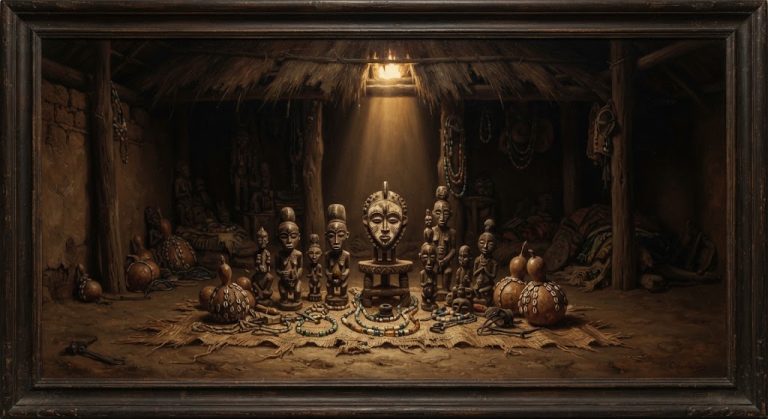
Myth is the oldest and most symbolically loaded of the three categories. It deals with ultimate questions: how the world began, why death exists, where fire or language or agriculture came from, how the gods relate to humans. Myths are populated by gods, spirits, ancestral or cosmic beings, and forces of nature personified into characters.
The defining feature of myth is not that it is false, but that its truth operates on a different register than factual accuracy. A myth is not trying to report an event the way a newspaper would; it is trying to communicate meaning — to explain the structure of the world, justify a ritual, or anchor a community's values in something larger than itself. Within the community that tells it, a myth is typically treated as sacred, not as entertainment or metaphor to be taken lightly.
A myth answers ‘why is the world this way,’ not ‘what happened on this date.’
Because myths deal with sacred and cosmic subject matter, they are largely immune to the kind of fact-checking that applies to history. You cannot verify the marriage of two sky-gods; you can only ask what that marriage explains, and what it asks of the people who tell the story.
2. Legend: The Human Past, Embellished
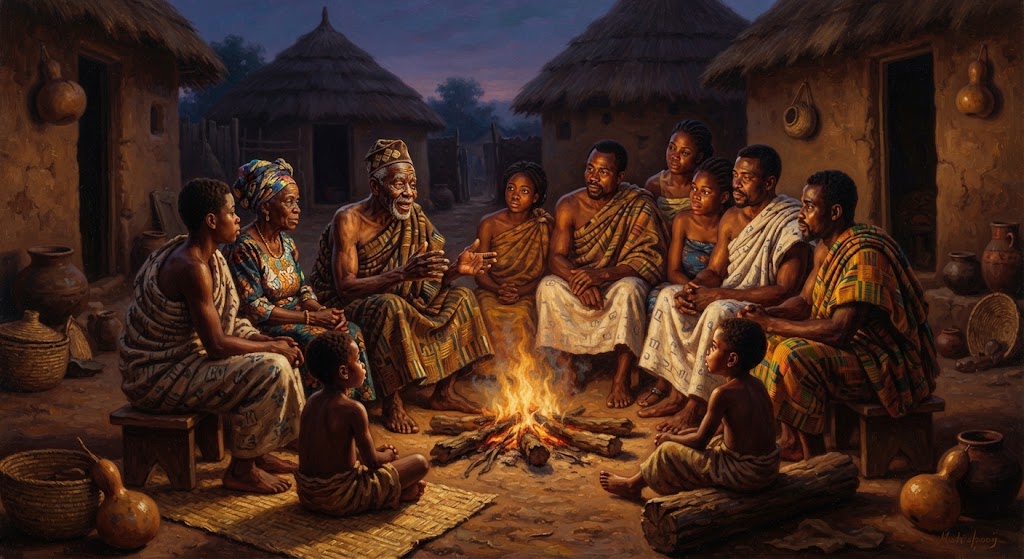
Legend occupies the middle ground. Unlike myth, legend is set in the human, historical world — it is usually tied to a real (or plausibly real) person, place, or event. Unlike history, legend does not submit itself to verification; instead, it grows through retelling, gathering exaggeration, compressed timelines, and sometimes miraculous or supernatural embellishments as it passes from generation to generation.
A legend typically starts with a kernel of fact — a real king, a real battle, a real journey — and then accumulates layers of narrative shaping that serve the needs of the audience retelling it: national pride, moral instruction, entertainment, or the desire to make an ancestor larger than life. Robin Hood may be loosely rooted in real outlaws of medieval England; King Arthur may reflect a garbled memory of a post-Roman British warlord; the popular retelling of Mansa Musa's 14th-century pilgrimage to Mecca, in which his gold-giving supposedly collapsed Cairo's economy, has become legendary in its scale even though the underlying journey was real.
The test for legend is usually: is there a plausible historical seed, however small, buried under generations of narrative accretion? If yes, you are likely dealing with legend rather than myth.
3. History: The Evidence-Based Reconstruction
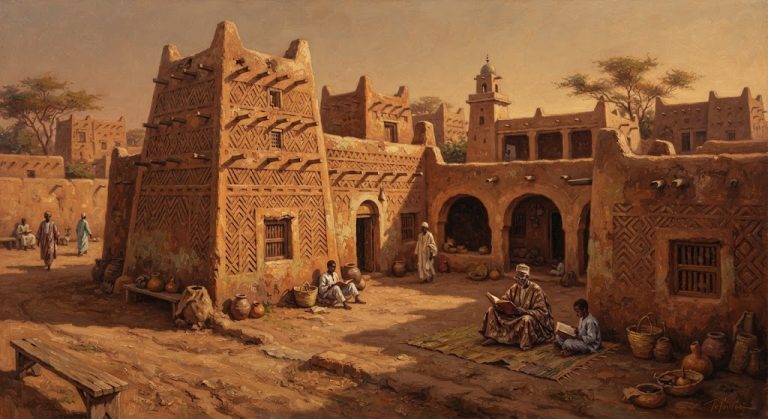
History aims at something narrower and more disciplined: a reconstruction of the past built from evidence — documents, inscriptions, archaeology, oral testimony, material culture — and subjected to methods designed to test, cross-check, and correct claims. History does not claim to be free of bias, gaps, or interpretation; historians disagree, sources are incomplete, and every historical account is shaped by the vantage point of whoever is writing it.
What separates history from myth and legend is not perfection but posture: history submits its claims to scrutiny. A historical claim can, in principle, be checked against a source, a date, an artifact, or a competing account, and revised when new evidence turns up. Myth and legend are not built to be checked in that way — that isn't a flaw in them, it's simply not what they are for.
4. Where the Lines Blur
In practice, these three categories are less like sealed boxes and more like a spectrum, and real traditions often sit across more than one point on it at once. A single story can carry mythic, legendary, and historical weight simultaneously, depending on who is listening and what they are listening for.
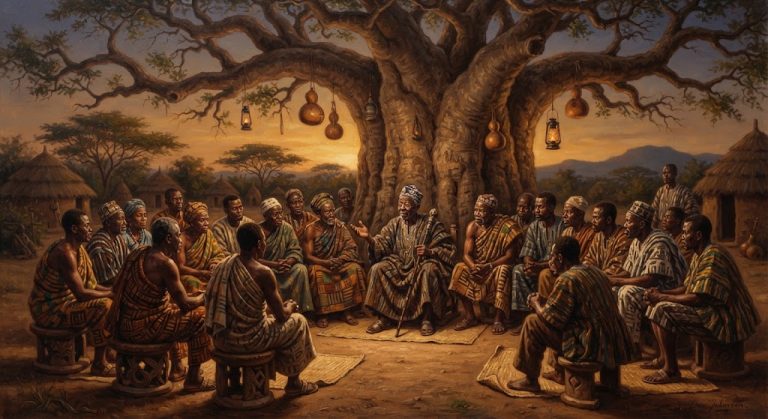
This is especially true across much of Africa, where oral tradition has long carried history, legend, and myth together within the same praise-songs, epics, and griot narratives, rather than separating them into distinct genres the way much of Western historiography does. A griot's account of a founding king, for instance, may simultaneously function as verifiable political history (who ruled, in what order, over which territory), as legend (the king's exploits magnified for honor and instruction), and as myth (his authority linked to spiritual or cosmic sanction). Treating only the “verifiable” layer as real and discarding the rest as decoration risks flattening what the story was actually doing for the people who kept it alive — binding a community, transmitting values, and asserting legitimacy, all at once.
This is worth keeping in mind whenever the myth/legend/history distinction is applied to oral or indigenous traditions generally: the Western academic separation of “fact” from “meaning” is itself a cultural choice, not a neutral, universal yardstick. A more careful approach asks what kind of truth a given story is claiming for itself, on its own terms, before asking whether it “actually happened.”
5. A Quick Comparison
|
Myth |
Legend |
|
|
Subject |
Gods, cosmic origins, natural forces |
Real or semi-real people, places, events |
|
Time frame |
Sacred, timeless — “before time” |
Historical, but distant enough to blur |
|
Function |
Explains why the world is as it is |
Celebrates, warns, or binds a community |
|
Truth claim |
Sacred truth, not literal fact |
Kernel of fact, heavily embellished |
|
Example |
Creation stories; origin of death |
King Arthur; Robin Hood; Mansa Musa's gold |
Closing Thought
Myth, legend, and history are not competing claims to the same kind of truth — they are three different tools for holding onto the past, each suited to a different job. Myth explains the shape of existence. Legend keeps human memory vivid and morally charged. History tries, imperfectly, to pin the past down with evidence. Recognizing which register a story belongs to — or which registers it moves between — is often the difference between reading a tradition faithfully and quietly misreading it.